
Digital marketing has become one of the most in-demand career paths in today’s digital world. As businesses increasingly move online, the need for skilled digital marketers continues to grow. Starting a career in digital marketing does not always require a specific degree, making it accessible to students, professionals, and even beginners looking for a career change.
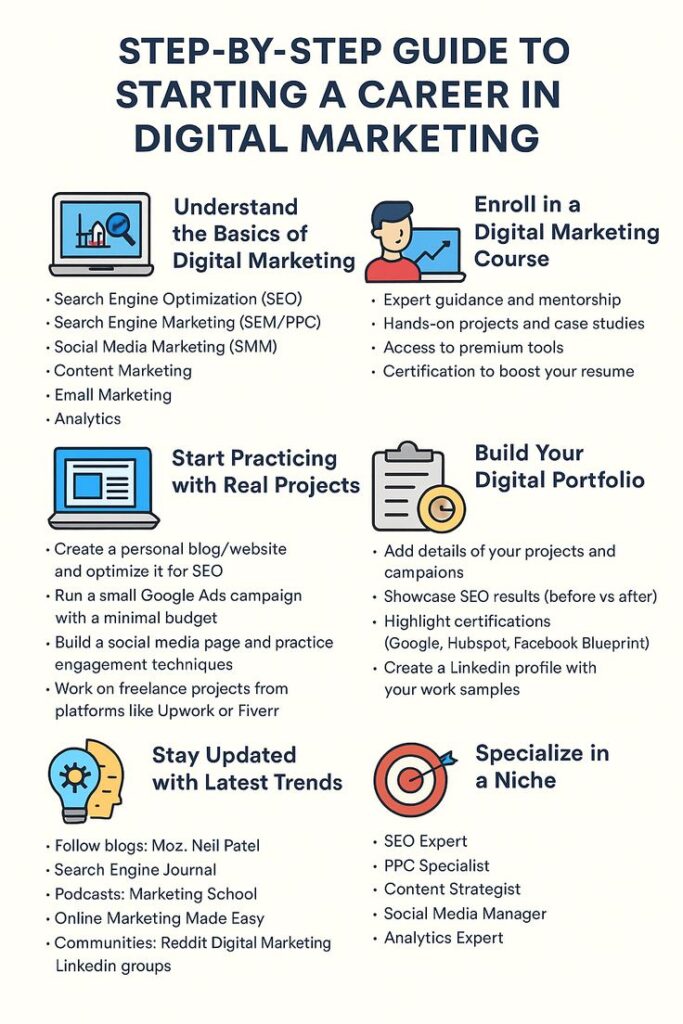
The first step is to understand the core areas of digital marketing. For example, these include search engine optimization (SEO), social media marketing, content creation, email marketing, and paid advertising. Additionally, gaining basic knowledge in each of these areas will help you choose the right career path. Moreover, it builds a strong foundation for long-term growth in the field.
Practical experience is essential in digital marketing. You can start by creating your own blog, managing a social media page, or helping a small business build its online presence. These hands-on experiences allow you to apply what you’ve learned and develop real-world skills. Additionally, learning tools such as Google Analytics and Canva can give you an advantage in the job market.
Building a portfolio is another important step. Showcasing your work, including content samples, campaign results, and social media growth, can help you stand out to employers. Once you gain confidence, you can apply for internships, freelance projects, or entry-level roles.
In conclusion, starting a career in digital marketing requires continuous learning, creativity, and practical experience. With dedication and the right approach, anyone can build a successful and rewarding career in this dynamic field.
What is Digital Marketing?
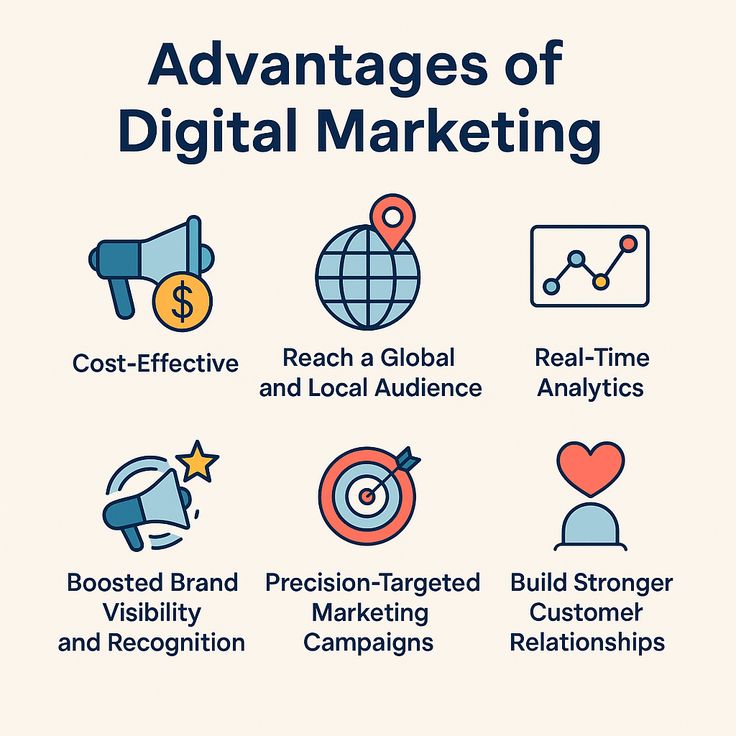
Digital marketing is the process of promoting products or services through online channels such as websites, search engines, social media, and email. It covers areas like Search Engine Optimization (SEO), content marketing, social media marketing, email campaigns, and Pay-Per-Click Advertisin g (PPC). Each of these plays an important role in building a strong online presence and helping businesses reach their target audience.
Step 1: Learn the Basics
To begin your journey, focus on understanding the core concepts of digital marketing. Learn how search engines rank websites, how content attracts users, and how online campaigns work. There are many courses and resources available that can help you get started.
Pay attention to key areas such as keyword research, website optimization, and content creation. A strong foundation will make it easier to learn advanced strategies later.
Step 2: Choose Your Specialization
Since digital marketing is a wide field, it is helpful to focus on one area. Popular options include SEO, content marketing, social media management, PPC advertising, and email marketing.
If you enjoy writing, content marketing could be a good choice. If you prefer analyzing data and performance, SEO or PPC might suit you better. Choosing a specialization allows you to build deeper expertise.
Step 3: Gain Practical Experience
Practical experience is essential in digital marketing. Start by working on your own projects, such as creating a blog, managing a social media page, or running small campaigns. This helps you understand how strategies work in real situations.
You can also gain experience through internships, freelance work, or by helping small businesses improve their online presence. These experiences will build your confidence and skills.
Step 4: Build a Portfolio
A portfolio helps you showcase your work and prove your abilities. Include examples like blog posts, SEO improvements, social media growth, or campaign results. Even if you are new, you can create sample projects to demonstrate your skills.
Having a well-organized portfolio makes it easier for employers or clients to understand what you can do.
Step 5: Learn Digital Marketing Tools
Digital marketing involves using tools to track performance, manage campaigns, and understand audience behavior. Learning tools related to SEO, analytics, email marketing, and social media scheduling will give you an advantage.
These tools make your work more efficient and help you make better decisions based on data.
Step 6: Stay Updated
The digital marketing field keeps changing, so it is important to stay updated. Search engine updates, new social media features, and changing trends can affect your strategies.
Make it a habit to follow industry blogs, watch tutorials, and learn new techniques regularly. Staying informed will help you remain competitive.
Step 7: Apply for Jobs or Start Freelancing
Once you have the basics and some practical experience, start applying for entry-level roles such as digital marketing executive or SEO analyst. These roles help you gain real industry experience.
Freelancing is another good option if you prefer flexible work. It allows you to work with different clients and build a strong portfolio over time.
Step 8: Develop Important Skills
In addition to technical knowledge, certain skills are important for success in digital marketing. Communication, creativity, problem-solving, and adaptability all play a key role.
Understanding your audience and creating effective strategies will help you achieve better results.
Conclusion
Starting a career in digital marketing may feel challenging in the beginning, but it becomes easier with consistent effort and learning. Focus on building your knowledge, gaining experience, and improving your skills step by step. With time, you can establish yourself in this growing field and create a successful career.